EU AI ACT AUTHORISED REPRESENTATIVE FOR UKRAINE
EU Compliance for Ukrainian AI
Ukraine’s EU accession process brings Ukrainian companies closer to the European market than ever before — but the EU AI Act applies now, not on accession day. Ukrainian AI companies placing systems on the EU market today face the same Authorised Representative obligation as any other non-EU provider.
Fixed annual fee · Named EU entity · Compliant from day one

EU AI ACT AND UKRAINIAN TECH PROVIDERS
EU market access is the opportunity. EU AI Act compliance is the condition.
Three reasons Ukrainian AI companies need to act on their EU obligations now — and why waiting for accession is the wrong strategy.
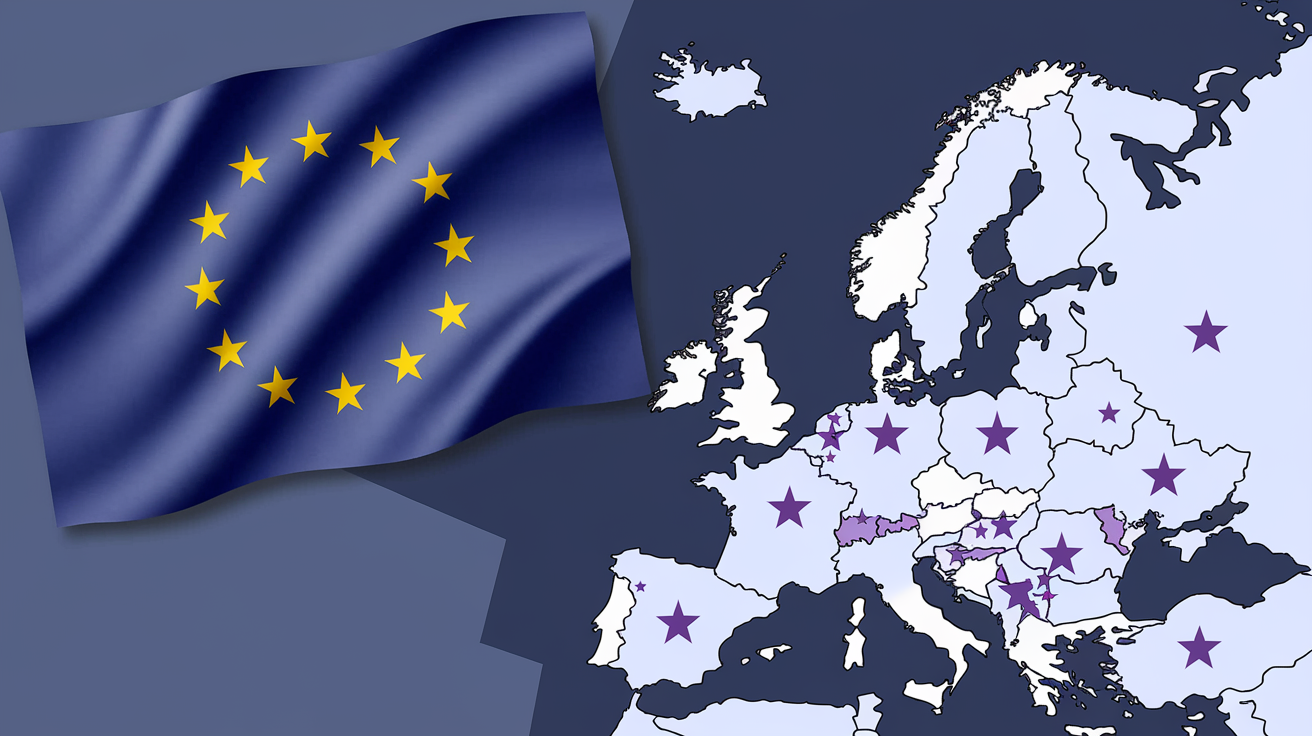

The EU AI Act applies before Ukraine joins the EU
Ukraine’s EU candidate status and accession negotiations do not extend the EU’s regulatory perimeter to Ukraine today. The Act follows the product, not the geopolitical trajectory. A Ukrainian AI company with EU clients, EU SaaS users, or EU enterprise contracts is placing its system on the EU market within the meaning of Article 2 right now.

Ukrainian AI is entering the EU market at exactly the moment compliance matters most
Ukrainian AI companies are increasingly competitive in EU markets — and EU buyers, investors, and partners are taking notice. That commercial momentum is now running directly into the EU AI Act’s enforcement timeline. Article 5 prohibited-practice rules are in force. High-risk obligations apply from August 2026. The Ukrainian AI companies that arrive in the EU market with compliance in order will close deals faster and on better terms.

EU reconstruction and recovery funding will demand compliance
Ukraine’s post-war reconstruction will involve significant EU funding. AI products bidding into EU-funded reconstruction projects — infrastructure, healthcare, education, public administration — will face procurement requirements that include AI Act compliance as a standard condition. Ukrainian AI companies that establish compliant EU market access now are positioned for that opportunity. Those that don’t will be filtered out at the procurement stage.
Ukraine’s path to the EU is one of the most consequential opportunities in European tech. The EU AI Act is a threshold condition for participating in that opportunity compliantly and competitively. This service establishes your EU presence today, accountable to EU authorities, so you are ready for the market that is opening.
WHAT’S INCLUDED
Everything required for a compliant EU AI Act presence
A substantive legal appointment that satisfies Article 22 — not a registered address that fails the moment an EU authority, procurement team, or institutional partner asks a real question.

Named EU Authorised Representative
A specialised entity established in the EU, appointed under Article 22, identified in your technical documentation and EU AI database registration. Legal standing with EU market surveillance authorities — the person they write to, and the person who responds substantively on your behalf.
Mandate agreement drafted and executed
A compliant appointment document reflecting the Act’s formal requirements — scope of representation, obligations, and terms — ready to include in your technical file and present to any EU authority, institutional partner, or enterprise buyer that requests evidence of compliance.
Technical documentation copy maintained
Your technical documentation and EU declaration of conformity are held as required by Article 22 — available to market surveillance authorities on request, maintained and updated as your product develops.
Authority correspondence handling
All EU regulatory authority correspondence relating to your system is received, escalated, and handled in coordination with your team. You are notified immediately, in Ukrainian. No position is taken without your involvement. No response goes without your approval.
Annual review and regulatory alerts
A structured annual call covering product changes, new deployments, and regulatory developments affecting your AR obligations or your system’s classification. Alerts when enforcement activity or Commission guidance is relevant to your category.
Priority AI product assessment
If your AI product changes during the year and raises a reclassification question, you are prioritised. The conversation is included in the service — no additional charge for the call that keeps your compliance position current.

About the provider: (yes, that’s real me)
I’m Yuliia Habriiel — a regulatory lawyer who spent years inside EU digital regulation: not just the AI Act, but GDPR, NIS2, DORA, the Cyber Resilience Act, and ISO 42001.
I build compliance infrastructure for a living, so I know the difference between a requirement that’s theatrical and one that will actually get enforced. The EU AI Act is written at the level of the product — yet almost everyone is still trying to comply at the level of the organisation. That mismatch is where companies get caught.
When you work with me, you’re not getting a generic audit or AI’s best guess. You’re getting the same legal reasoning the regulators apply, turned on the one thing that matters: the AI system you’re shipping.
Who this service is for:
Ukrainian AI companies with existing EU clients, EU SaaS deployments, or EU API integrations that have not established a compliant AR appointment and need to resolve that position before it surfaces in a renewal conversation, a procurement questionnaire, or a regulatory enquiry.
Ukrainian tech companies relocating or expanding into the EU — whether through Estonian e-residency, Polish subsidiaries, or other EU legal structures — who are building EU market presence and need their AI product compliance to match their corporate structure.
Ukrainian AI startups raising from EU investors or accessing EU grant funding where AI Act compliance is increasingly a condition of investment terms, grant eligibility, or partnership agreements with EU institutions.
Ukrainian companies in sectors that map onto Annex III high-risk categories — defence-adjacent technology, healthcare AI, document processing, recruitment tools, public administration systems, infrastructure monitoring — where high-risk classification is likely and the AR requirement applies before market entry.
Ukrainian system integrators and software exporters whose EU clients are now requiring AI Act compliance documentation as part of vendor management, enterprise risk programmes, or EU-funded project requirements.
Ukrainian AI companies participating in EU reconstruction and recovery programmes where procurement compliance, including AI Act obligations, is a condition of eligibility and contract award.
What our customers say:

Thank you for sending the strategy doc. I did not even expect it to be customised so it provides a good strategy tool to help me think about developing my application.

Meredith Godat, PhD
Founder, CogniQuest (Switzerland)
We’ve been trying to figure out how the EU AI Act affects our drone platform, especially around AI-based navigation. The report helped make sense of what actually applies to us and what we need to pay attention to. It gave us a much better picture of where we stand and what we need to do next before expanding into the EU market.

Denis Isakovs,
CTO, ProDrone
(Latvia)
Before this report, every AI Act discussion ended in confusion. Now I can confidently present classification decisions to our legal team and explain timelines to stakeholders. Worth every euro.

Robert Müller
Head of Product, MedicaTech Solutions (Germany)
Backed by Our Guarantee
The mandate we execute satisfies Article 22 of the EU AI Act to the letter. The annual fee is fixed — no surprise invoices for correspondence handling, regulatory alerts, or review calls within the scope of the service. If your product changes during the year in a way that means the AR service is no longer needed, we refund the unused portion on a pro-rata basis. What you are paying for is a compliant EU presence, maintained for twelve months. That is what we deliver

Audit-Proof Documentation

Lifetime AI Act Updates Included

If You Don’t Need It, We Tell You

Flexible Time Investment
Appoint your EU Authorised Representative — compliant from day one
✔︎ Free product scoping assessment
✔︎ Mandate agreement drafted and executed
✔︎ Authority correspondence handling for twelve months
✔︎ Technical documentation copy maintained
✔︎ Annual review call and regulatory alerts
✔︎ Priority reclassification assessment if needed
€2,400/year · Billed annually · No hourly billing · No open-ended scope
Frequently Asked Questions
Does the EU AI Act apply to Ukrainian companies right now?
Yes. Ukraine’s EU candidate status does not extend the EU’s regulatory perimeter to Ukraine. Ukrainian companies are currently third-country providers under Article 2 of the EU AI Act — subject to the same extraterritorial obligations as companies from the US, UK, India, or any other non-EU country when their AI systems reach EU users.
The Act applies based on where your product is used, not where your company is incorporated or where Ukraine is in its accession process.
Will EU accession change our obligations?
When Ukraine joins the EU — which remains a multi-year process — Ukrainian companies will transition from third-country providers to EU-established providers, at which point the AR requirement falls away and is replaced by direct compliance obligations. Until accession, the third-country provider framework applies in full.
Companies that establish compliant EU market access now will be better positioned for that transition, not worse.
What is an EU AI Act Authorised Representative and why does a Ukrainian company need one?
An Authorised Representative under Article 22 is a firm established in an EU member state, appointed by a non-EU provider to act as their legal point of contact for EU regulatory authorities. For Ukrainian companies placing high-risk AI systems on the EU market, the appointment is a legal precondition for compliant market access — not an administrative step to address once the business is large enough.
Without a compliant AR on record, a Ukrainian company is in breach of the Act regardless of how capable its product is or how established its EU client relationships are.
Many Ukrainian tech companies have Estonian e-residency or EU subsidiaries. Does that satisfy the AR requirement?
Possibly, but not automatically. An Estonian e-residency does not create EU legal establishment for AI Act purposes — e-residency is a digital identity, not a corporate presence. A properly constituted EU subsidiary with genuine establishment in a member state could potentially act as its own AR, but only if it is the entity placing the system on the market and it meets the Act’s requirements.
If the Ukrainian parent company is the provider of record, a subsidiary arrangement requires careful legal structuring. Our AR service provides a clean, unambiguous solution regardless of your corporate structure.
Which Ukrainian AI products are most likely to be high-risk under the EU AI Act?
Ukraine’s AI sector strengths include areas that map closely onto Annex III high-risk categories — defence-adjacent and dual-use technology, document processing and verification systems, healthcare AI, public administration tools, infrastructure monitoring, and recruitment platforms.
If your product operates in any of these areas and has EU users or EU institutional clients, high-risk classification is likely in play. Our AR service includes a product review at onboarding to confirm your classification before the mandate is executed.
Is a registered address in an EU member state sufficient?
No. Article 22 imposes active legal obligations on the AR — to maintain technical documentation, cooperate with market surveillance authorities, and take corrective action where required. A registered address cannot fulfil any of these obligations. An AR that exists only on paper provides no protection when an EU authority makes a substantive enquiry and leaves the Ukrainian company in the same legal exposure as having no AR at all.
What happens when an EU market surveillance authority contacts our Authorised Representative?
We receive the correspondence, notify you immediately (English or Ukrainian), and coordinate the response with your team. We do not take positions on your product or make commitments to authorities without your explicit involvement.
The AR role is to be the accountable EU point of contact. Decisions about your product and compliance position remain yours. If an enquiry escalates to formal enforcement proceedings, that is a separate legal engagement agreed before we proceed.
Can Ukrainian companies be fined under the EU AI Act?
Yes. The Act’s enforcement provisions apply to non-EU providers regardless of establishment. Fines for prohibited-practice violations reach €35 million or 7% of global annual turnover. Fines for high-risk system violations reach €15 million or 3% of global annual turnover. EU market surveillance authorities can pursue non-EU companies through their Authorised Representative.
The territorial reach of EU enforcement has been established through GDPR. Ukrainian companies that assumed GDPR enforcement wouldn’t reach them discovered otherwise. The AI Act follows the same model.
How does this service work practically given the current situation in Ukraine?
The service is fully remote — no physical presence in Ukraine is required at any stage. Scoping, onboarding, mandate execution, annual review calls, and all ongoing communication are conducted digitally. We work with Ukrainian companies across multiple time zones and are experienced with the operational realities facing Ukrainian businesses.
The mandate is executed under EU law and maintained by an EU-established company — your location does not affect the legal validity or practical function of the appointment.
How long does it take to appoint an EU Authorised Representative?
From instruction to executed mandate is typically three to five working days. The mandate is executed once we have sufficient knowledge of your product — its function, deployment context, and current documentation position — to fulfil our obligations under Article 22 responsibly.
We do not accept appointments for products we have no visibility of.
What is included in the €2,400 annual fee?
Mandate drafting and execution, named AR appointment, authority correspondence handling for twelve months, technical documentation copy maintenance, annual review call, and regulatory alerts relevant to your system’s category. Work outside that scope — a full reclassification assessment, legal representation in enforcement proceedings, or technical documentation drafting — is a separate engagement quoted before any work begins.
The annual fee is fixed and does not vary with correspondence volume or the number of regulatory enquiries within the service scope.