EU AI ACT AUTHORISED REPRESENTATIVE FOR US BUSINESSES
Get Compliant With EU AI Act
The EU AI Act applies the moment your AI system’s output reaches a user in the EU — even if you are incorporated in the USA, your servers are in California, and you don’t have a single employee in Europe. If you’re a US company placing a high-risk AI system on the EU market, the Act requires you to appoint a named representative inside the EU.
No obligation · Takes 15 minutes · Includes free product assessment

EU AI ACT AND US COMPANIES
The EU AI Act reaches your product. Not your U.S. headquarters.
Three reasons US AI companies can’t afford to ignore this law — and why the AR requirement is the one that surfaces first.

Extraterritorial scope, no exceptions
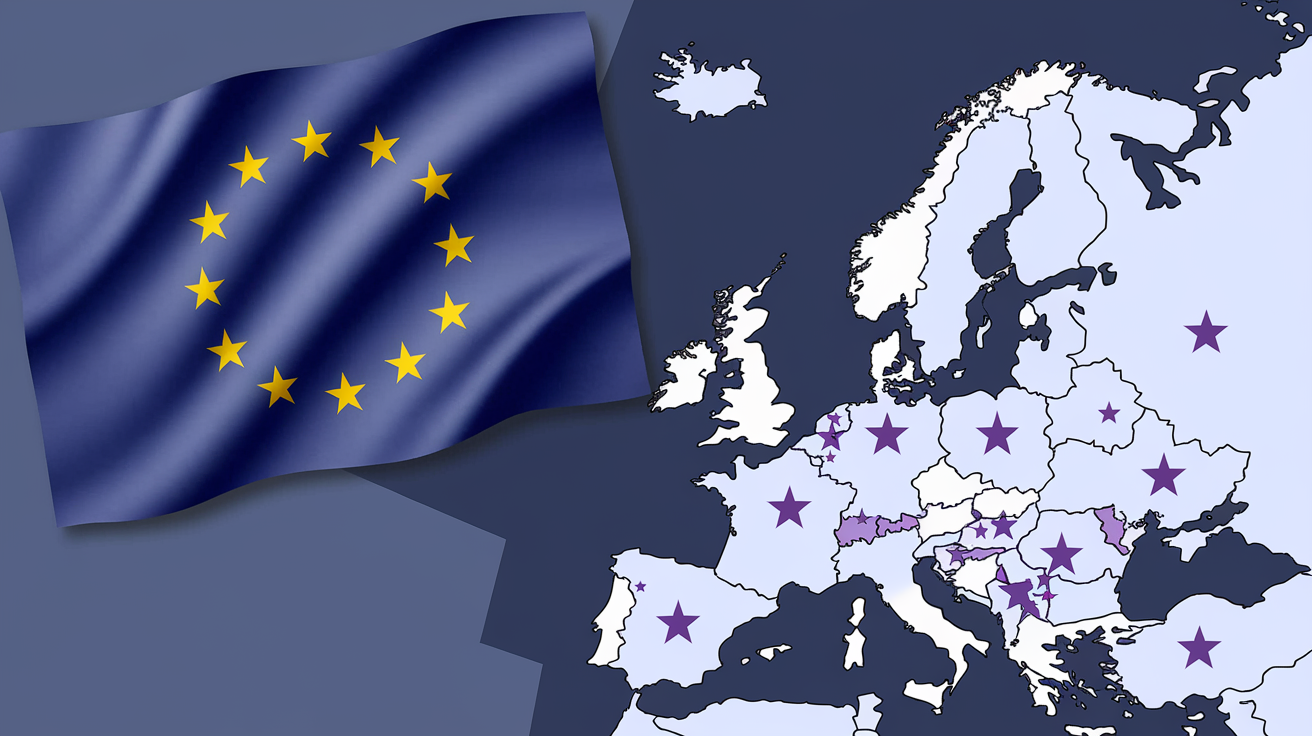
The EU AI Act applies to any provider placing an AI system on the EU market — defined by where the product is used, not where the company is based. A US company with EU users, EU enterprise clients, or EU public sector contracts follows the same extraterritorial logic EU applied to GDPR.

The AR requirement is a hard legal obligation
Article 22 of the EU AI Act requires non-EU providers of high-risk AI systems to appoint a named Authorised Representative established inside the EU before placing the system on the market. Not after. Operating without one is a verifiable breach — straightforward for a market surveillance authority to act on.

It surfaces in due diligence before it surfaces in enforcement
Most US founders encounter the EU AI Act obligation from an investor or acquirer asking about EU regulatory exposure. A missing AR appointment, absent technical documentation, or unresolved classification question stalls or reprices a deal. ECS free scoping assessment resolves all three before someone else raises them.
You don’t need a European office to sell AI into Europe. You need a named EU lawyer on your regulatory documentation, a compliant appointment on record, and certainty about your product’s classification. That is what this service provides.
WHAT’S INCLUDED
Everything required for a compliant EU AI Act presence
A named EU entity, a documented appointment, and ongoing protection — not a letterbox address that cannot answer when a regulator writes.

Free product scoping assessment
Confirms whether the Act reaches your product, whether an Authorised Representative is required, and which obligations apply — before any commitment. If you don’t need the service, we tell you clearly and the assessment costs you nothing.
Named EU Authorised Representative
A company established in the EU, appointed under Article 22, identified in your technical documentation and EU AI database registration. A person accountable to EU authorities — not a registered address.
Mandate agreement drafted and executed
A compliant appointment document reflecting the Act’s formal requirements, confirming scope, obligations, and the terms under which we represent you. Ready to include in your technical file from day one.
Authority correspondence handling
Receipt, escalation, and coordinated response to all EU regulatory authority enquiries relating to your system. You are notified immediately. Nothing is decided without your involvement.
Annual review and regulatory alerts
An annual call covering product changes, new deployments, and regulatory developments. Alerts when enforcement activity, Commission guidance, or harmonised standard publications affect your system’s category.
Priority assessment access
If a product change during the year raises a reclassification question, you go to the front of the queue. No additional charge for the conversation — it is part of the service.

About the consultant:(yes, that’s real me)
I’m Yuliia Habriiel — a regulatory lawyer who spent years inside EU digital regulation: not just the AI Act, but GDPR, NIS2, DORA, the Cyber Resilience Act, and ISO 42001.
I build compliance infrastructure for a living, so I know the difference between a requirement that’s theatrical and one that will actually get enforced. The EU AI Act is written at the level of the product — yet almost everyone is still trying to comply at the level of the organisation. That mismatch is where companies get caught.
When you work with me, you’re not getting a generic audit or AI’s best guess. You’re getting the same legal reasoning the regulators apply, turned on the one thing that matters: the AI system you’re shipping.
Who this service is for:
- US AI companies selling or planning to sell into the EU market — whether through direct user access, enterprise contracts, API licensing, or white-label arrangements. If EU users interact with your system’s output, the Act reaches you.
- Founders who heard “EU AI Act” in a due diligence conversation and need to resolve their position before the next investor meeting, the next term sheet, or the next closing condition.
- US companies that have GDPR compliance in place and now need to extend that posture to the AI Act. Your GDPR Article 27 representative does not satisfy the AI Act AR requirement — they are separate appointments under separate regulations.
- Product teams preparing for an EU launch who want a compliant presence established before their first EU customer, not scrambling to fix it after.
- Series A and B companies whose investors are asking about EU regulatory exposure as part of portfolio risk management — and who need a documented, defensible answer ready.
- US companies that have received enquiries from EU regulatory authorities or whose EU partners have raised questions about AI Act compliance. The time to establish a compliant AR is before the second enquiry, not after. the Act reaches them the moment their output is used in the Union
No prior legal training required.
What our customers say:

Thank you for sending the strategy doc. I did not even expect it to be customised so it provides a good strategy tool to help me think about developing my application.

Meredith Godat, PhD
Founder, CogniQuest (Switzerland)
We’ve been trying to figure out how the EU AI Act affects our drone platform, especially around AI-based navigation. The report helped make sense of what actually applies to us and what we need to pay attention to. It gave us a much better picture of where we stand and what we need to do next before expanding into the EU market.

Denis Isakovs,
CTO, ProDrone
(Latvia)
Before this report, every AI Act discussion ended in confusion. Now I can confidently present classification decisions to our legal team and explain timelines to stakeholders. Worth every euro.

Robert Müller
Head of Product, MedicaTech Solutions (Germany)
Backed by Our Guarantee
The free scoping assessment is genuinely free and genuinely independent. If it establishes that your product doesn’t reach the EU market in the relevant way, or that the AR requirement doesn’t apply to your system, you leave the call with a clear answer and no invoice.

Audit-Proof Documentation

Lifetime AI Act Updates Included

If You Don’t Need It, We Tell You

Flexible Time Investment
Resolve your EU AI Act position in one 15-minute call
✔︎ Free product scoping assessment
✔︎ Point of contact with EU regulators
✔︎ Technical file maintenance
€2,400/year · Includes everything listed above · Billed annually
Frequently Asked Questions
Does the EU AI Act apply to my US company if we have no office or employees in Europe?
Yes, if your AI system’s output reaches EU users. Article 2 of the Act applies to providers placing AI systems on the EU market — defined by where the product is used, not where the company is incorporated or where its servers are located. A US company that makes an AI system available to EU users, sells to EU businesses, or provides services consumed in the Union is placing that system on the EU market. The same extraterritorial logic underpinned GDPR, and enforcement followed. The free scoping assessment confirms whether and how this applies to your specific product.
What US industries and AI products are most likely to be high-risk under the EU AI Act?
High-risk classification under Annex III is determined by function and deployment context, not industry label. US AI products in the following categories are most commonly in scope: hiring and recruitment tools, credit scoring and lending platforms, education and student assessment systems, biometric identification and verification, healthcare decision support, fraud detection used by financial institutions, and any AI embedded in products regulated as safety components.
If your product touches any of these areas and has EU users, the scoping assessment is the right first step.
We already have a GDPR representative in Europe — does that cover the EU AI Act?
No. A GDPR Article 27 representative and an EU AI Act Article 22 Authorised Representative are separate appointments under separate regulations, with different obligations, different documentation requirements, and different regulatory accountability. The roles can be held by the same firm, but the mandates must be distinct.
If you have a GDPR representative, that is useful context for the scoping call, but it does not satisfy the AI Act requirement.
What is the difference between an EU AI Act Authorised Representative and a registered address service?
A registered address gives you a name and postcode to put on a form. An Article 22 Authorised Representative has active legal obligations under the Act to maintain your technical documentation and declaration of conformity, to cooperate with market surveillance authorities on request, and to take corrective action where required.
An AR who cannot fulfil those obligations substantively is not compliant with the Act’s requirements and exposes you to the same enforcement risk as having no AR at all. We provide a dedicated representative with direct knowledge of your product and the legal standing to respond to EU authorities meaningfully.
When did the EU AI Act requirement come into force and how urgent is this for US companies?
The Act is already in force. Article 5 prohibited-practice provisions have applied since February 2025 — with no grace period for non-EU providers. High-risk system obligations apply from December 2026 but the Authorised Representative requirement has been in force since 2025. GPAI model obligations are also in force.
If your product falls into a prohibited-practice or high-risk category, you are already subject to those rules. Early appointment is not a formality — it is the difference between a clean regulatory record and a verifiable breach.
What happens if an EU regulator contacts our Authorised Representative?
We receive the correspondence and notify you immediately. We coordinate the response with your team — we do not take positions on your product or make commitments to authorities without your involvement. The AR role is to be the accountable EU point of contact but decisions about your product remain yours.
If an enquiry escalates to formal enforcement proceedings, that is a separate engagement discussed and agreed before we proceed.
Can a US company be fined under the EU AI Act?
Yes. The Act’s enforcement provisions apply to providers and deployers regardless of establishment. Fines for prohibited-practice violations reach €35 million or 7% of global annual turnover. Fines for other high-risk system violations reach €15 million or 3% of global annual turnover. National market surveillance authorities can impose these on non-EU companies, and the EU AI Office has direct enforcement powers over GPAI providers. The territorial reach of EU enforcement has been established through GDPR — the AI Act follows the same model.
How quickly can we get an Authorised Representative appointed?
Once the free scoping assessment confirms you need the service and you decide to proceed, mandate execution typically takes three to five working days. Your AR details can be included in your technical documentation and EU AI database registration immediately after execution. We do not accept appointments for products we have no knowledge of — the scoping assessment is the process by which we establish that knowledge, which is also why it produces a useful output regardless of whether you proceed.
What does €2,400 per year cover — are there additional charges?
The annual retainer covers mandate execution, authority correspondence handling, technical documentation copy maintenance, annual review call, and regulatory alerts. Work outside that scope — a full reclassification assessment if your product changes significantly, legal representation in formal enforcement proceedings, or documentation drafting — is a separate engagement quoted and agreed before any work begins. Nothing is charged without your explicit agreement.
We’re a Canadian or UK company, not US. Does this service apply to us?
Yes. The extraterritorial scope of the EU AI Act applies equally to Canadian and UK companies. Post-Brexit, UK companies are treated identically to any other non-EU provider. There is no special status or transition arrangement.
So yes, Canadian companies are in the same position as US companies. The AR requirement, the risk classification obligations, and the prohibited-practice rules all apply. The free scoping assessment covers your position regardless of which non-EU jurisdiction you’re based in.